The Weighted Jump Rope Built to Keep Challenging You
Anti-slip handles with a removable internal weight, two swap cables — one thin, one heavy — and a ball-bearing swivel that keeps every rotation smooth. Built for boxers, lifters, and anyone who's outgrown a plastic speed rope.
🚨 Only a few left in stock
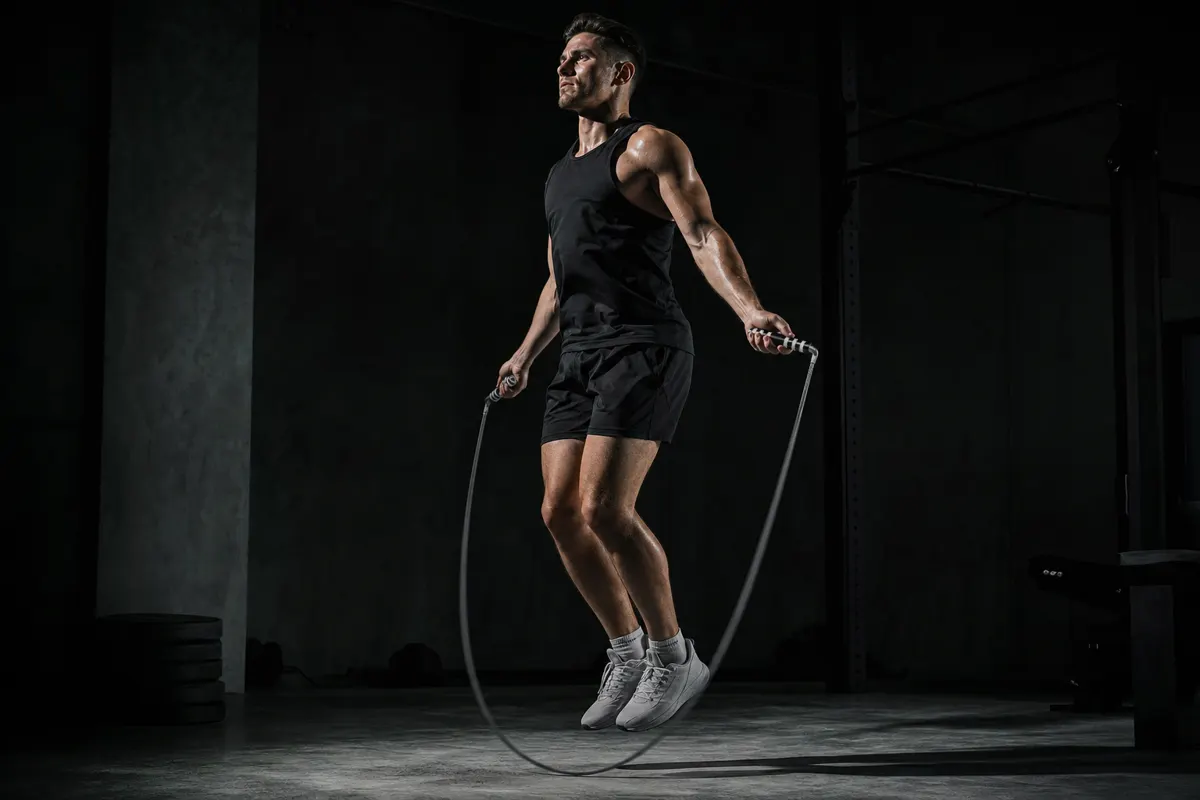
A Plastic Speed Rope Stops Working. This One Doesn't.
Most jump ropes are built to be light. That's the point of a speed rope — thin cable, minimal resistance, built purely for fast footwork and cardio. It's a great tool until your shoulders stop feeling anything after the first two minutes. Once your conditioning catches up to the rope, the workout plateaus, no matter how many reps you add.
A weighted jump rope works differently. Ironpace's Dual Cable System puts a removable weight inside each handle, so your forearms and shoulders are working through every rotation, not just your legs. The rope ships with two cables — a thinner one for speed and technique work, and a thicker one that's noticeably heavier than a standard speed cable — so you can switch the feel of the workout without buying a second rope. Both cables run on a sealed ball bearing, which is the part that actually determines whether a weighted rope feels smooth or fights you mid-set.
The training effect isn't complicated. Adding resistance to the rotation of the rope forces your forearms, shoulders, and upper back to stabilize the swing instead of just flicking the wrist, which is why boxers and CrossFit athletes gravitate toward weighted setups for conditioning blocks rather than pure speed work. It's the same reason a heavy bag session leaves your shoulders more fatigued than shadowboxing — the resistance is doing real work, not just adding motion. None of that requires a published weight figure to be true; it's the resistance itself, not a number on a spec sheet, that changes how the session feels by round three.
Buyers who've trained with it describe exactly this: one verified buyer wrote that the "additional weight inside the handle can be removed. Perfect for training," while another noted that "the rope bearing is very good, but the cables are heavy... both are quite heavy" compared to what they expected at this price. That's intentional. Ironpace doesn't publish an exact gram or pound figure for the handle weight or the cables, because the spec sheet doesn't give one — what we can tell you, honestly, is that the weight is removable if you want to train lighter, and both cables are heavier than a typical speed rope.
If your main goal is dropping body fat rather than building shoulder endurance, read our dedicated guide on using a weighted jump rope for weight loss — it covers rep schemes and pacing instead of hardware. If you've never trained with a weighted rope before, start with our beginner's guide instead, since the learning curve is different from a standard speed rope.
Three Parts That Make a Weighted Rope Worth Buying
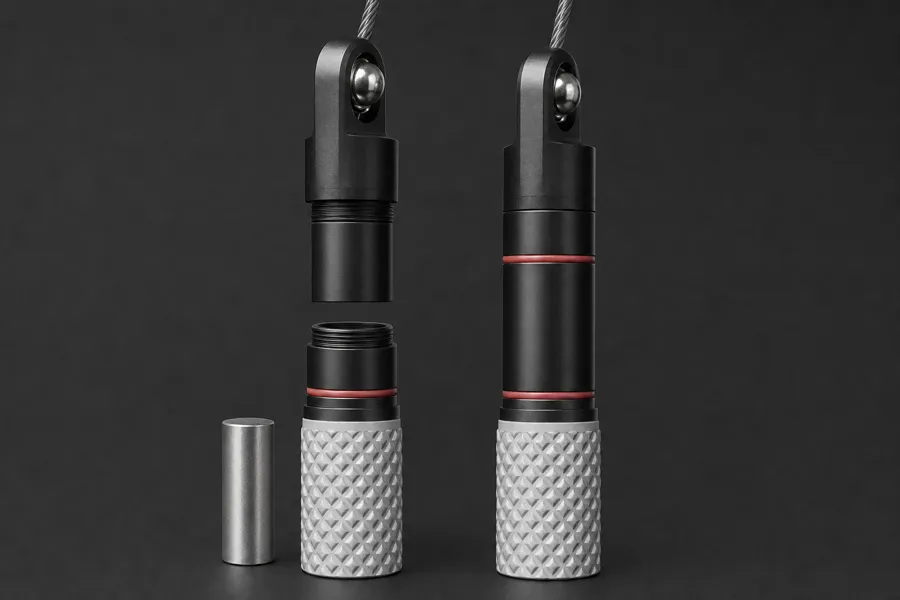
Weight You Can Dial Back
Each handle holds a removable internal weight insert, so you can train heavier when you want shoulder and forearm resistance, or pull the weight out when you just want fast, light footwork — one rope covers both sessions instead of two.
Weighted rope handles are the part that separates a real conditioning tool from a toy. Ironpace's anti-slip handles are built around a removable weight insert — unscrew the cap, take the insert out on a day you want pure speed work, leave it in when you're chasing grip and shoulder endurance during a conditioning block. What verified buyers consistently report is that the weight is noticeable and fully removable, which is the feature that actually matters when deciding whether this rope fits your training.
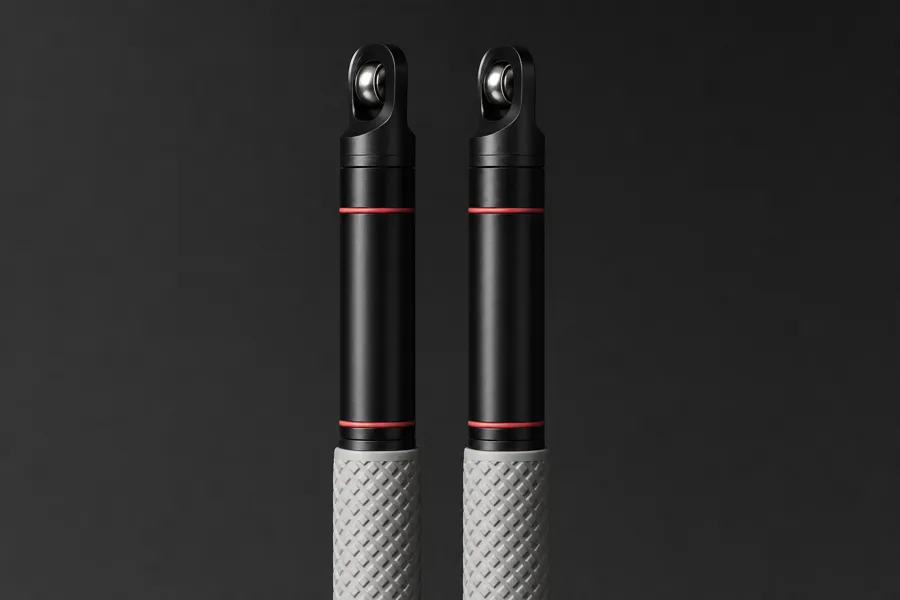
A Grip That Doesn't Slip Mid-Set
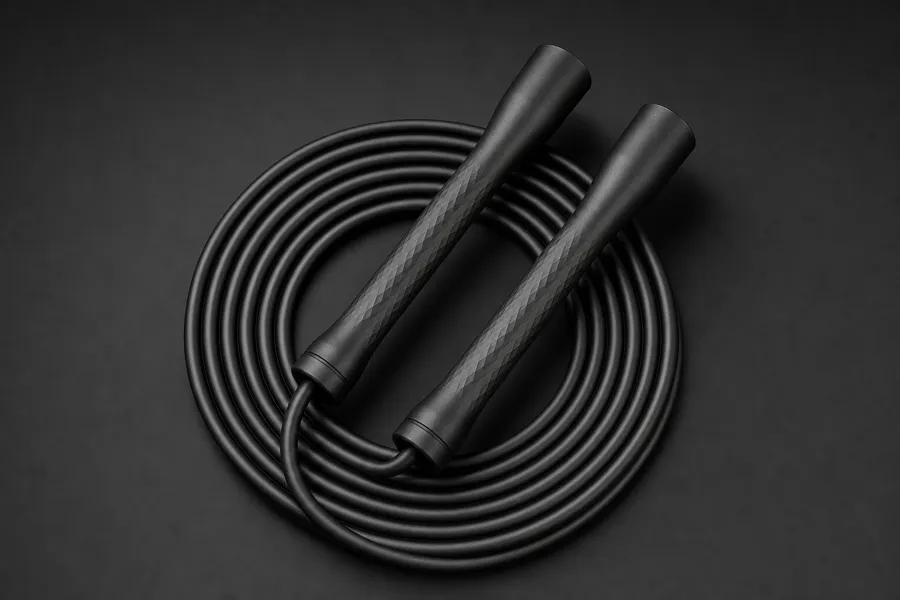
The knurled grip section sits below the weighted body of each handle, so the part your hand actually holds stays secure once your palms start sweating through a longer set.
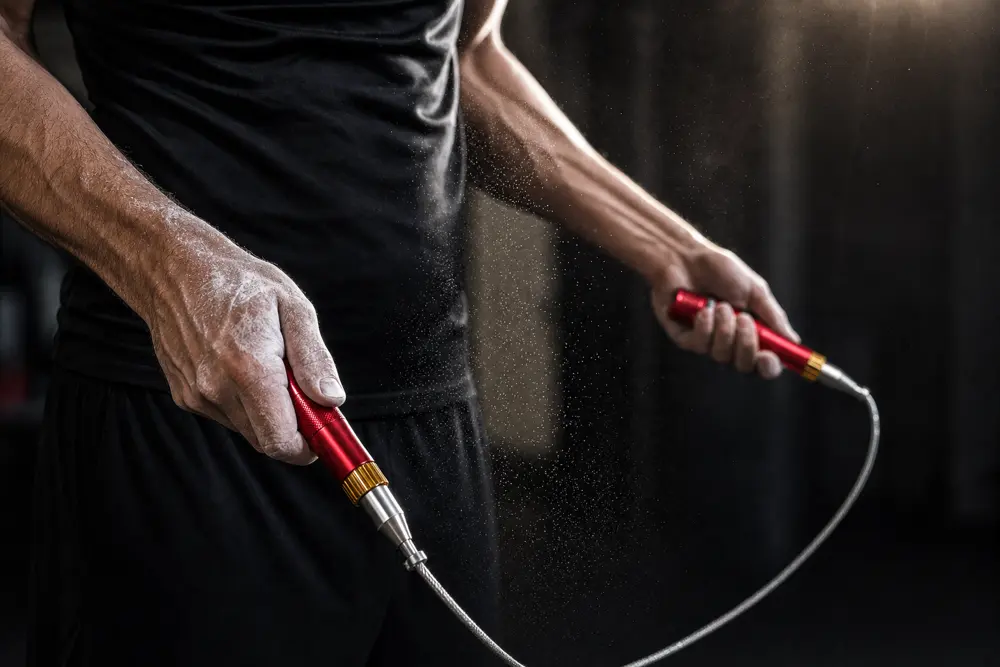
Handle grip matters more on a weighted rope than a speed rope, because you're gripping harder to control the extra mass through each rotation. The textured section is where your hand sits for the whole session, and it's built to hold up under chalk, sweat, and repeated use rather than going smooth after a few weeks.
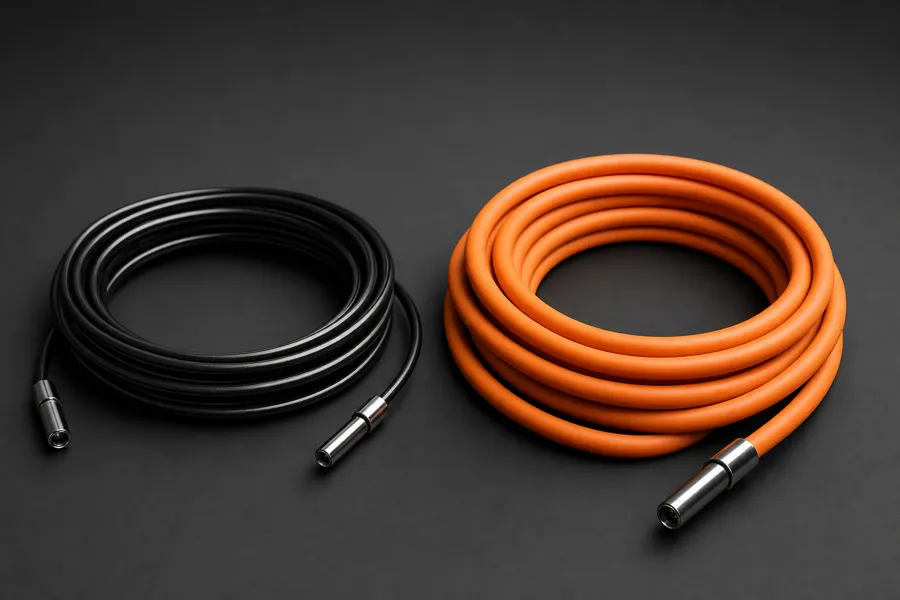
Two Cables, One Rope
Every Ironpace rope ships with two cables: a thin one for speed and technique work, and a noticeably thicker one that's heavier than a standard speed cable. Swap between them in under a minute, so one rope does the job of a speed rope and a weighted rope.
The thin cable is what you'll use for double-unders, footwork drills, and anything where speed matters more than resistance. The thick cable is where the weighted-rope training actually happens — it's the one verified buyers describe as heavy compared to a normal speed rope, and it's what turns a jump rope session into a shoulder and forearm workout. Both cables terminate in the same connector, so switching takes a twist and a pull, not a wrench. If you're not sure which cable to start with, our guide on choosing your cable and handle weight walks through it session by session.
A Bearing Smooth Enough to Trust, and a Case to Protect It
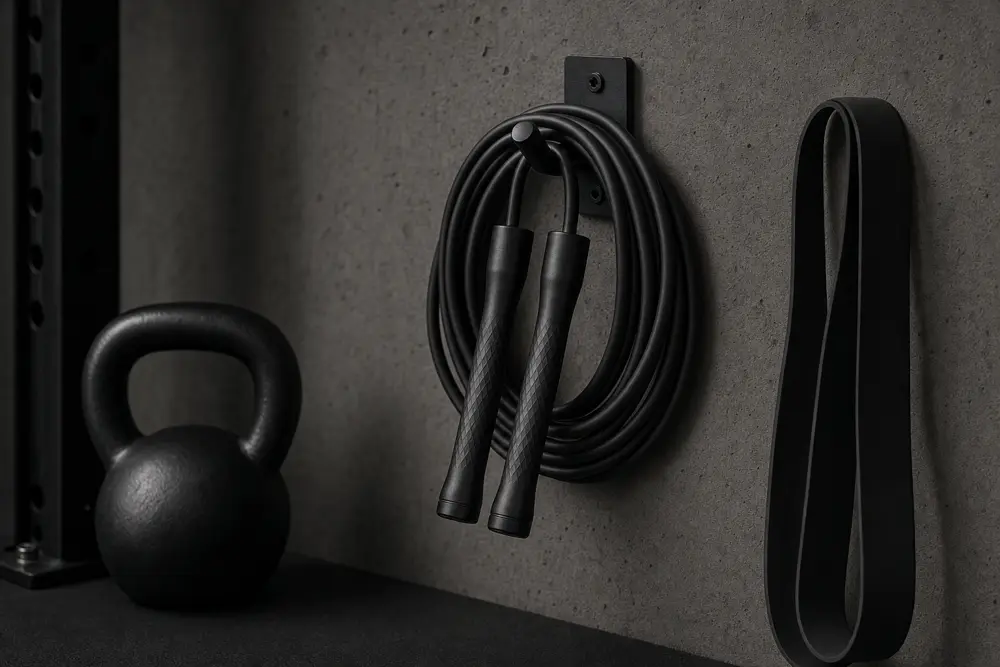
A sealed ball bearing sits inside each handle so the cable spins independently of your wrist — the difference between a rope that flows and one that torques your hand on every rotation. It ships in a carry case so the whole system travels without tangling.
A rope with a rough or sticky bearing will fight you the moment you add cable weight — every rotation transfers torque straight into your wrist instead of spinning free. Ironpace's ball bearing is built to keep that spin isolated, which matters more with a weighted cable than a light one. The included carry case keeps both cables, the handles, and any removed weight together between sessions, instead of loose in a gym bag where a thick cable tends to tangle with everything else. It's a small detail, but it's the kind of thing Derek checks on every rope before Ironpace sells it — see how we test for the full process.
How We Actually Use the Two Cables (Not Just What's in the Box)
Most product pages list "two cables included" and stop there. We ran both cables — thin and thick, weight in and weight out — through the same conditioning block Derek uses with boxing and CrossFit clients, and logged what each setup is actually good for, so you're not guessing which one to grab first.
| Setup | Best for | What we noticed |
|---|---|---|
| Thin cable, weight out | Speed drills, double-unders, footwork | Closest feel to a standard speed rope, easiest to learn timing on |
| Thin cable, weight in | Technique work with some conditioning | Timing stays sharp, forearms start to feel it by the third round |
| Thick cable, weight out | Steady-state conditioning rounds | Cable alone adds enough resistance without stacking it |
| Thick cable, weight in | Max-effort finisher rounds | Heaviest combination we tested, best kept to short 60–90s rounds |
The Numbers Behind Ironpace
Verified buyer reviews on file for this rope
— Ironpace order history, 2026
Average rating across those verified purchases
— Ironpace verified buyer feedback, 2026
Units sold to date
— Ironpace sales data, 2026
Weighted Rope vs. a Standard Speed Rope
| Feature | Ironpace Weighted Rope | Standard Speed Rope |
|---|---|---|
| Handle weight | Removable internal weight insert | None |
| Cables included | 2 — thin + thick, both heavier than a speed cable | Usually 1 lightweight cable |
| Bearing | Sealed ball bearing swivel | Varies, often a simple swivel |
| Carry case | Included | Rarely included |
| Best for | Shoulder/forearm conditioning, boxing, CrossFit | Pure speed, double-unders, footwork |
A standard speed rope is still the better tool if double-unders and raw speed are your only goal — it's lighter, cheaper, and easier on the wrists for pure cardio sessions. But if you've plateaued on a plastic speed rope and reps stopped feeling like work, resistance is usually the missing variable, not more volume. That's a big part of why this rope carries 58 verified reviews averaging close to 4.8/5 (Ironpace order history, 2026) rather than the mixed reviews typical of unbranded weighted ropes with no case, no bearing spec, and a single fixed cable. See the full breakdown in our weighted vs. speed rope comparison.
"I test every rope we sell through the same block: warm-up with the thin cable, three or four rounds with the thick one, weight left in the handles the whole time. If the bearing binds or the handle grip slips by round three, it doesn't go on the site. This one didn't fight me once — that's rarer than people think at this price."— Derek Malone, Strength coach & product lead at Ironpace
Get yoursGet the Ironpace Dual Cable Weighted Jump Rope
Free shipping · 30-day money-back guarantee
Ironpace Weighted Jump Rope — Dual Cable System
You save $20
Order — $49.95 →Choose your color — Black, Silver, or White — at checkout.
Free shipping · Ships in 6-10 business days
🔒 Secure checkout · Cards & Apple Pay accepted · 30-day money-back guarantee · see our shipping policy and refund policy
How to Choose Your Weighted Jump Rope Setup
Which cable and weight setting should I start with?
There's no single right setup — it depends on what you're training for and how long you've been jumping rope. Start with the thin cable and the handle weight removed if you've never used a weighted rope before, or if you're coming back after time off. This is the closest the Dual Cable System gets to a standard speed rope, and it lets you rebuild timing before you add resistance. Our full beginner's guide walks through a two-week ramp if you want a structured starting point.
Once footwork feels automatic, put the weight back in the handles and keep the thin cable for another week or two. This is where most people notice the difference first — your forearms and shoulders start working through the swing, even though the cable itself hasn't changed. It's a good long-term setup if your main goal is general conditioning rather than boxing-specific work.
Switch to the thick cable once you want the workout to feel like resistance training instead of cardio with a rope. Boxing-style conditioning blocks — the kind Derek programs for clients — usually pair the thick cable with the handle weight installed, in rounds of 60 to 90 seconds rather than long continuous sets; our workout routines guide has three ready-to-run versions of this. If fat loss is the actual goal rather than upper-body conditioning, cable weight matters less than interval structure — see our weighted jump rope for weight loss guide for the rep schemes that move the needle.
Whatever combination you land on, swap cables and adjust the handle weight based on how your shoulders feel that day, not a fixed program. That's the entire point of a dual-cable, adjustable-weight rope over a fixed speed rope: the hardware adapts to the session instead of you adapting to the hardware.
One more thing worth planning around: give the bearing a session or two to bed in before you judge it. Like any sealed bearing, it spins a touch tighter out of the case than it does after your first few hundred reps, and that's true whichever cable you start on. If it's still binding after that, that's a fit issue worth raising with us directly rather than something to push through.
Specifications
| Handle weight | Removable internal weight insert (exact weight not on the spec sheet) |
| Cables included | 2 — one thin, one thick (both heavier than a standard speed cable) |
| Bearing | Sealed ball bearing swivel |
| Carry case | Included |
| Colors | Black, Silver, White |
| Shipping | Free, US 6–10 business days |
| Returns | 30-day money-back guarantee |
Ironpace doesn't publish an exact gram or pound figure for the handle weight or either cable — the spec sheet only confirms that the handle weight is a removable insert and both cables are heavier than a standard speed rope. If exact specs matter for your program, contact us before ordering and we'll check the specs directly.
Rated 4.8 / 5 across 58 verified buyers
These are lightly edited excerpts from verified purchases — we haven't added claims buyers didn't make, and we're not publishing staged reviews with stock photography. Full write-ups are on our reviews page.
"The additional weight inside the handle can be removed. Perfect for training."
— Verified buyer
"The rope bearing is very good, but the cables are heavy. They send two — one thinner, one thicker — and both are quite heavy."
— Verified buyer
"Identical to the description, and to that other rope that costs a lot more."
— Verified buyer
See our reviews page for more verified buyer feedback.

Derek Malone · Strength coach & product lead at Ironpace
Derek has coached boxing and CrossFit conditioning for over a decade. He tests every rope Ironpace sells through real training blocks — bearing smoothness, cable swap speed, handle grip, and how the weight actually feels after 500 reps.
Reviewed and updated July 5, 2026. Learn more about Ironpace or see how we test.
Weighted Jump Rope FAQ
Does the Ironpace weighted jump rope have an exact weight in grams or pounds?
The handle weight is a removable insert, and both the thin and thick cables are noticeably heavier than a standard speed rope. If precise specs matter for your training log, contact us and we'll look into it for you.
What is the difference between the thin and thick cable?
The thin cable is closer to a standard speed rope — better for footwork, double-unders, and technique work. The thick cable is heavier and is where most of the shoulder and forearm resistance comes from. Both use the same connector, so switching between them takes under a minute.
Can I make the rope lighter if it feels like too much resistance?
Yes. The weight inside each handle is a removable insert, not a fixed part of the handle. Pull it out and switch to the thin cable if you want something closer to a standard speed rope while you build up to the heavier setup.
Is a weighted jump rope good for beginners, or only advanced athletes?
Beginners can use it — start with the thin cable and the handle weight removed, then add resistance once your footwork is consistent. Our beginner's guide walks through a two-week ramp if you're new to rope work in general, not just weighted ropes.
Which color should I choose — Black, Silver, or White?
All three come with the identical Dual Cable System, handles, bearing, and case — color is purely cosmetic. Pick whichever you prefer; you'll choose Black, Silver, or White directly at checkout.
Does Ironpace ship outside the United States?
Yes, we currently ship to 18 countries — the US, Canada, the UK, Australia and 14 European destinations. The full list is in our Shipping Policy. US orders ship free and typically arrive in 6 to 10 business days; international timelines can run longer depending on customs.
What if the rope doesn't work for my training style?
You're covered by a 30-day money-back guarantee from delivery. Reach out through our contact page and we'll walk you through the return — no need to justify the reason in detail.
How long does shipping actually take?
Most US orders arrive within 6 to 10 business days of the order shipping. You'll get a tracking link by email as soon as your order ships, so you're not guessing.
Stop Outgrowing Your Jump Rope
Removable handle weight, two cables, one bearing that doesn't fight you. $49.95, free shipping, 30-day money-back guarantee.
Get My Rope — $49.95 →