· Derek Malone
Weighted Jump Rope Benefits: What to Actually Expect
Most of what gets said about weighted ropes online falls into two camps: people who treat it like a miracle fat-burner, and people who dismiss it as a gimmick. Neither is accurate. Here is what actually changes when you swap a light speed rope for a weighted one, based on running training blocks with both.
1. Grip and forearm endurance go up first
The first thing you notice with a weighted rope isn't your legs — it's your hands. Every rotation makes the handles work like a light isometric load for your fingers, wrist, and forearm. Over a few weeks of consistent sessions, that translates into a noticeably firmer grip on other lifts: pull-ups, deadlifts, farmer carries. This is the most reliable, least debatable benefit of training with a heavier rope, and it's the one most rope reviews skip entirely because it isn't as exciting as "burns fat."
The Ironpace handles use removable weight inserts, so you can start light while your forearms adapt and add resistance back in as grip endurance improves — instead of being stuck with a single fixed load from day one.
2. The same rep count costs more cardio-wise
Swinging more mass around on every rotation means your shoulders, arms, and core are doing more work per turn of the rope — even before your feet leave the ground. In practice, that means a 3-minute round on a weighted rope feels harder than a 3-minute round on a plastic speed rope, at the same cadence. Coaches use this to condense conditioning work: fewer total rounds needed to hit the same perceived effort.
That said, "feels harder" is not the same as "burns X calories" — calorie burn depends on your body weight, your pace and how long you keep going. If your goal is rope work as part of a fat-loss plan, treat it as one input among training volume, diet, and recovery — not a shortcut around any of them.
3. It slows your swing down — and that's the point
Speed ropes reward a fast, loose wrist flick. Weighted ropes punish it. You can't whip a heavier cable through the air the same way, so most people naturally slow their rotation, tighten their posture, and start turning the rope from the wrist and forearm instead of the whole arm. That's actually better technique — it's just easier to fake with a rope so light you can't feel your errors.
If you've been fighting sloppy form on a standard rope, spending time on a weighted one is one of the more direct ways to clean it up, because the extra resistance makes bad habits (arm-swinging, uneven rotation, hunching) obvious within the first minute.
| What changes | Speed rope | Weighted rope |
|---|---|---|
| Grip/forearm demand | Minimal | Noticeable from rep one |
| Swing speed | Fast, flicked | Slower, more controlled |
| Perceived effort per round | Lower | Higher at the same cadence |
| Form feedback | Forgiving | Exposes bad habits quickly |
What a weighted jump rope does not do
This is the part most product pages skip. Being honest about it matters more than another bullet list of upside.
- It does not guarantee weight loss. Fat loss depends on total training volume and diet, not the tool you swing.
- It does not come with a verified calorie-burn figure. Any number you see quoted for "jump rope calories" online is a generic estimate, not something measured for this specific product.
- It does not build serious muscle mass on its own. It builds endurance and grip conditioning — useful, but a different thing from hypertrophy training.
- It is not a replacement for strength training if that's your actual goal.
Who actually benefits from a weighted rope
Boxers and combat athletes get the clearest carryover, since grip endurance and controlled footwork are already part of the sport — see our boxing conditioning notes for how a heavier rope fits into a round-based warm-up. Beginners rebuilding basic coordination benefit from the slower cadence forcing cleaner form early. And anyone using jump rope as a conditioning finisher after lifting will feel the extra load add intensity without adding much time to the session.
It's a poor fit if you're chasing pure speed-rope numbers (double-unders for time, for example) — a lighter, thinner cable will always be faster for that specific goal.
How long before you notice a difference
There's no fixed timeline, but the pattern we see across training blocks is consistent enough to describe. Grip fatigue shows up in the first session — your forearms will feel it before your legs do. Within two to three weeks of regular use, most people report the rope "feeling lighter" even though nothing about the hardware changed; that's forearm and shoulder-stabilizer endurance catching up, not the weight decreasing. Form improvements tend to show up even faster, often within the first few sets, simply because a heavier cable makes a sloppy wrist flick physically harder to sustain than a clean, compact swing.
None of this is a substitute for tracking your own sessions. Note rep counts, round length, and how your grip feels at the end of a set — that's a better signal of progress than any generic number pulled from an unrelated study.
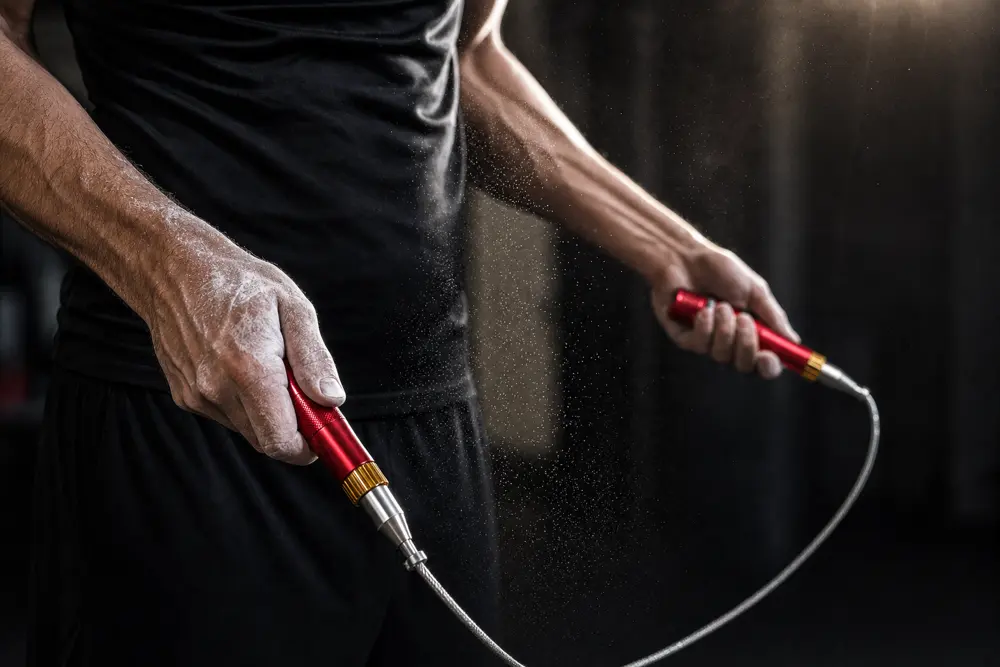
How Ironpace's dual-cable setup fits into this
The Dual Cable System ships with two cables — one thinner, one thicker — both weighted more than a standard speed rope, plus removable weight inserts in the handles. That combination lets you scale the challenge two ways: swap cables for a different swing feel, or pull weight out of the handles when your grip needs a lighter day. It's built around a ball-bearing swivel so the added weight doesn't turn into wrist strain from a stiff rotation.
verified buyer reviews collected
— Ironpace order history, 2026
average rating across those reviews
— Ironpace order history, 2026
units sold
— Ironpace sales data, 2026
Bottom line
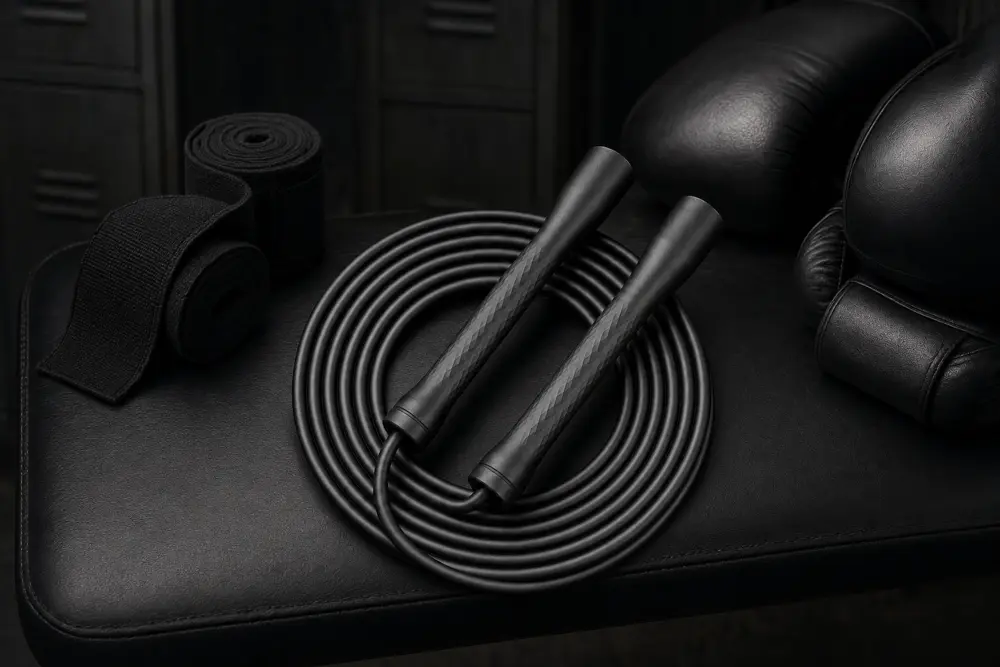
A weighted jump rope changes grip endurance, form, and per-round cardio demand — real, testable things. It does not change your bodyweight on its own and it doesn't come with a calorie number attached. If you want a tool that makes conditioning work feel more purposeful and exposes lazy technique, it does that reliably. If you want a guaranteed number on a scale, that's a training-and-diet question, not a rope question.
Read more on getting started with a weighted rope or check verified buyer reviews before you order. Full testing process is documented on how we test, and background on the brand is on our about page. Questions about sizing or shipping? See contact or our 30-day return policy.

Derek Malone · Strength coach & product lead at Ironpace
Derek has coached boxing and CrossFit conditioning for over a decade. He tests every rope Ironpace sells through real training blocks — bearing smoothness, cable swap speed, handle grip, and how the weight actually feels after 500 reps.