· Derek Malone
Choosing Your Cable: Thin vs Thick
If you've only ever used a single speed rope, the idea of choosing a cable before you train can feel like an extra step you don't need. It isn't. The cable you clip in changes the entire character of the set — how fast you can turn it, how much your shoulders and forearms feel it, and how long you can keep a clean rhythm going. This guide breaks down what each cable is actually for, how to swap between them, and how to pair that choice with the removable handle weight so your rope matches whatever block you're training that week.
Why Ironpace Ropes Ship With Two Cables
Every Ironpace Weighted Jump Rope comes in the case with both cables already included — you're not buying an upgrade or a replacement part later. The idea behind shipping two cables instead of one is simple: a single cable thickness can't serve both a fast double-under session and a slow, resistance-focused conditioning set. One or the other always gets compromised. Splitting the job between a thin cable and a thick cable means the rope adapts to the workout instead of the other way around.
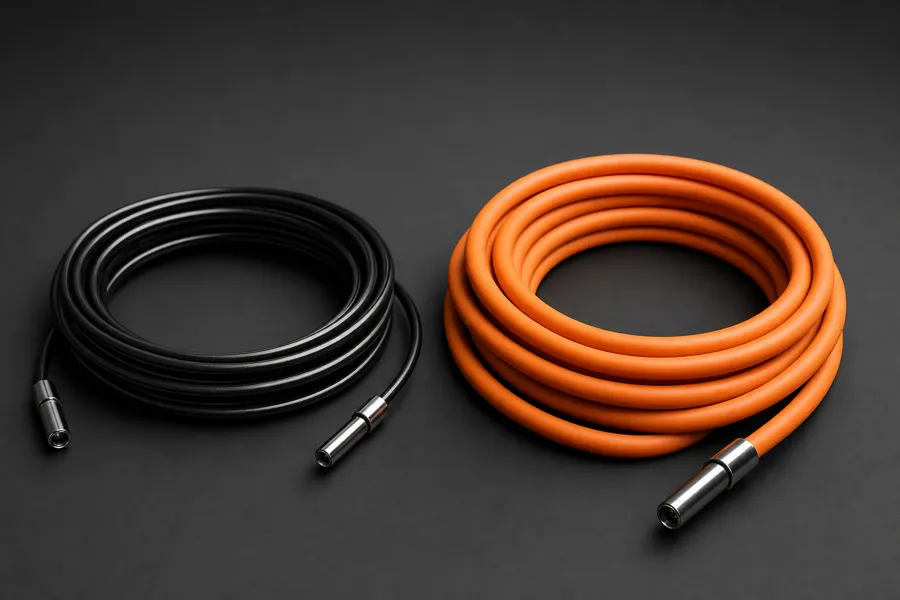
Both cables are noticeably heavier in the hand than a standard PVC speed rope, which is the point — the weight comes from the cable and the handle insert working together, not from one part alone. Buyers who've had both in hand describe the bearing as smooth and the cables themselves as clearly heavier than what they were using before, which lines up with how the system is built: two distinct tools, not one cable trying to do everything.
The Thin Cable: Built for Speed and Endurance
Because it's lighter and cuts through the air with less drag, the thin cable lets your wrists do most of the work instead of your whole arm. That's what makes fast, repetitive footwork possible for more than a minute or two at a time. It's the cable to use if you're building toward higher rep counts, working on rhythm and footwork, or running rope intervals inside a longer conditioning circuit. If your main goal right now is using the rope for calorie-burning cardio sessions, the thin cable is almost always the better starting point, since it lets you sustain a pace long enough to actually build an aerobic training effect.
The Thick Cable: Built for Resistance and Strength
Swap in the thick cable and the rope stops feeling like a cardio accessory and starts feeling like a piece of equipment you have to fight a little. Each rotation asks more of your shoulders, forearms, and grip, which is exactly why boxing coaches and strength athletes use a heavier cable in the first place — it turns a warm-up tool into an actual conditioning stimulus. Expect lower rep counts and shorter sets than you'd do on the thin cable; that's normal, not a sign anything is wrong with the rope. The thick cable pairs well with strength-focused blocks, and it's a good fit if you're just starting to add rope work into a routine — see our beginner's guide to weighted jump rope training for how to pace that first month.
Thin vs Thick: Quick Comparison
| Cable | Best for | Feel | Typical use |
|---|---|---|---|
| Thin cable | Speed, footwork, endurance | Lighter, less drag, faster turnover | Double-unders, cardio intervals, longer sets |
| Thick cable | Resistance, strength, conditioning | Heavier, more shoulder and forearm load | Slower sets, boxing conditioning, strength blocks |
How to Swap Cables
Swapping cables on the Dual Cable System takes under a minute and doesn't need any tools:
- Unscrew the end cap on one handle where the cable connects.
- Pull the current cable free from the ball-bearing housing.
- Feed the other cable into the same housing until it seats.
- Screw the end cap back down until it's snug.
- Give the rope a few slow turns to confirm the cable is seated evenly before you go full speed.
Because the swap is this quick, plenty of lifters keep both cables in the carrying case and change between them mid-session — thin cable for a warm-up round of double-unders, then the thick cable once the strength portion of the workout starts.
Removing or Adding Handle Weight
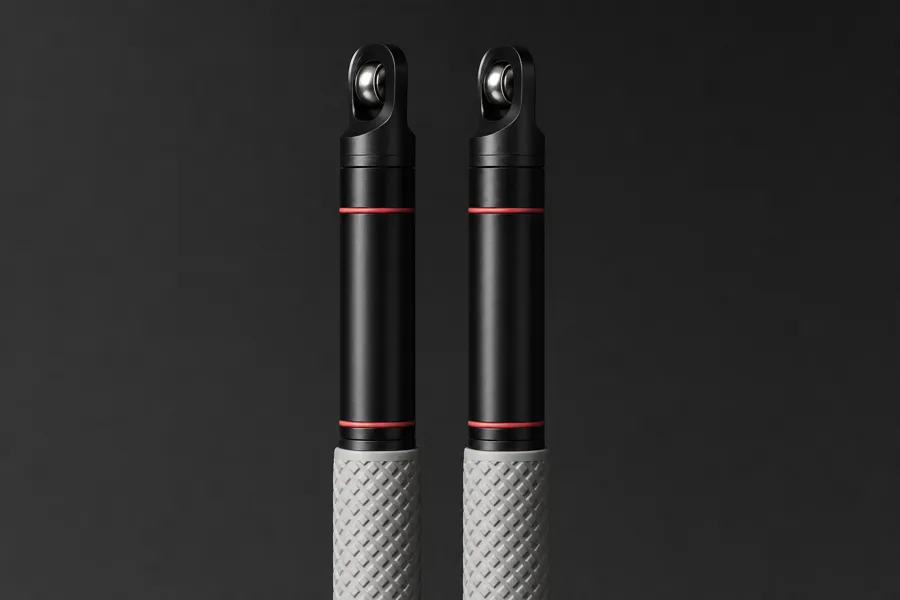
Open the handle cap and you'll find the weight insert sitting inside, separate from the cable connection. Sliding it out lightens the whole rope immediately, which is useful if you're pairing the thin cable with a session that's entirely about speed and want to strip out every ounce of drag. Leaving the insert in place, on the other hand, is what makes the thick-cable sessions feel like real resistance work instead of a slightly-heavier speed rope. Because the insert and the cable are independent adjustments, you effectively get four combinations from one rope: light handle plus thin cable for pure speed, light handle plus thick cable for a middle ground, full weight plus thin cable for endurance under load, and full weight plus thick cable for the hardest resistance sets.
Building a Simple Cable Rotation
You don't need a complicated system to get value out of having two cables. A straightforward rotation looks like: thin cable for two or three sessions a week focused on speed and rhythm, thick cable for one or two sessions focused on resistance and shoulder conditioning, and the handle weight adjusted up or down depending on how each session feels. Coaches training boxers often lean thick-cable-heavy through a camp and switch to thin-cable speed work in the final week before a fight, which is a pattern worth borrowing even outside of boxing — build resistance first, then sharpen speed on top of it.
What actually matters here isn't picking the "correct" cable in some abstract sense — it's matching the cable to what that session is supposed to accomplish. A rope that can only do one of those two things forces every workout into the same shape. One that ships with both, the way the Ironpace Dual Cable System does, lets the training plan lead instead of the equipment.
What the Numbers Say
verified buyer reviews reference the dual-cable design and handle weight insert
— Ironpace verified order history, 2026
average rating across every verified review Ironpace has collected on this rope
— Ironpace verified reviews, 2026
Ironpace ropes sold with this exact thin-and-thick cable system
— Ironpace sales record, 2026
Buyers who've reviewed the rope consistently call out the same two things: the bearing is smooth, and the cables are noticeably heavier than what they'd used before — with one thinner and one thicker, exactly as intended. You can read more of that feedback on our reviews page, or see the full testing process behind these calls on how we test.
Still deciding whether the Dual Cable System is the right rope for your training goals in the first place? Our about page covers who builds and tests Ironpace ropes, and our contact page is the fastest way to ask a specific question before you order. Every order also ships with free shipping and is covered by our 30-day money-back guarantee, so testing both cables risk-free is part of the deal.

Derek Malone · Strength coach & product lead at Ironpace
Derek has coached boxing and CrossFit conditioning for over a decade. He tests every rope Ironpace sells through real training blocks — bearing smoothness, cable swap speed, handle grip, and how the weight actually feels after 500 reps.